

For marine engineering, coastal infrastructure, desalination projects, and offshore equipment manufacturing, the biggest persistent challenge has always been seawater corrosion. High chloride concentration, constant salt fog erosion, alternating wet-dry cycles, and fluctuating temperatures can quickly degrade ordinary carbon steel and even standard 304 stainless steel, leading to pitting, structural cracking, unexpected equipment failure, and huge unnecessary maintenance costs. This is exactly why SUS 316L stainless steel coil has become the industry’s preferred material for seawater corrosion resistant components, earning a dominant position in the high-end marine material market.
Why Seawater Corrosion Destroys Ordinary Metal Materials
Seawater is one of the most aggressive natural environments for metals. The chloride ions in seawater can easily break down the passive protective film on the surface of ordinary stainless steel, triggering localized pitting and crevice corrosion that spreads rapidly even if the rest of the material looks intact. For coastal facilities and offshore equipment, long-term exposure to salt-laden humid air, periodic seawater splashing, and continuous immersion can cause ordinary steel components to fail in just 1–3 years, far short of the designed service life. This not only creates huge safety risks, but also leads to repeated shutdowns for inspection, repair, and part replacement, pushing up total project lifecycle costs dramatically.
The Core Advantages of SUS 316L Stainless Steel Coil for Seawater Environments
SUS 316L is an ultra-low carbon molybdenum-bearing stainless steel grade, specifically optimized for harsh corrosion scenarios like seawater exposure. Compared with common 304 stainless steel, its seawater chloride corrosion resistance is more than 3 times higher, making it far more reliable in long-term marine use.
The most critical performance benefits include:
- Exceptional pitting resistance: The addition of molybdenum element stabilizes the material’s surface passive film, preventing chloride ions from penetrating and causing localized rust spots, even in high-salinity stagnant seawater conditions.
- Intergranular corrosion immunity: Its ultra-low carbon content (≤0.03%) eliminates the risk of grain boundary corrosion that often occurs after welding, cutting, and high-temperature processing, ensuring the weld zones of your seawater components stay just as strong and corrosion-resistant as the base material.
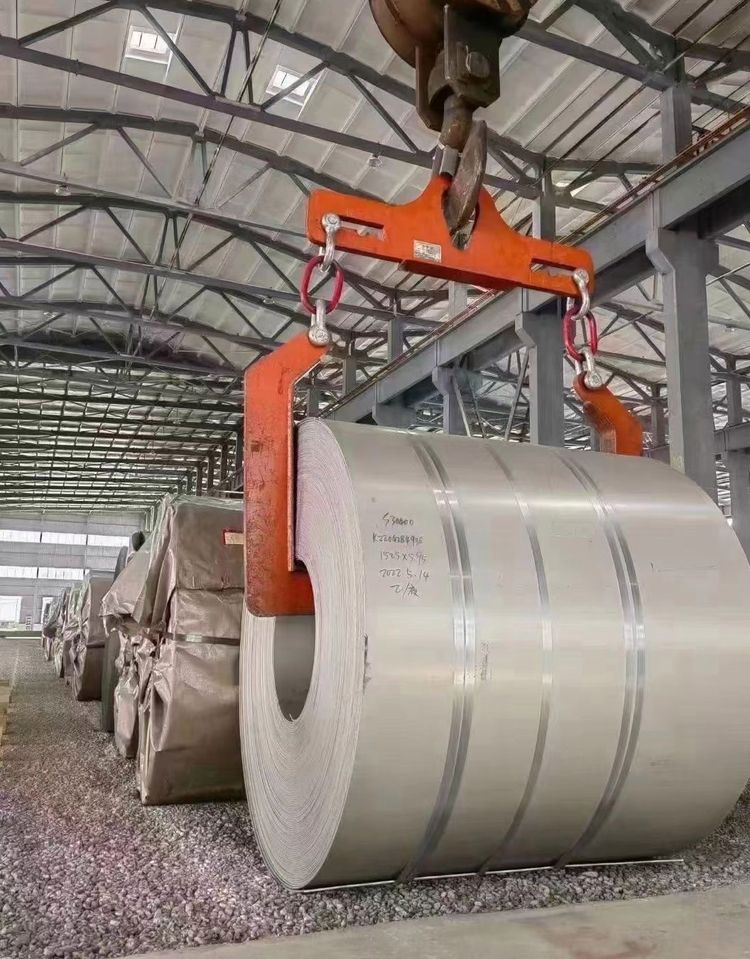
- Consistent, precision-rolled quality: Modern cold-rolled SUS 316L stainless steel coil delivers tight thickness tolerances, uniform internal microstructure, and smooth 2B, BA, or custom polished surfaces. This smooth finish prevents salt residue and impurities from adhering and accumulating, greatly reducing daily cleaning and maintenance workload.
- Excellent mechanical stability: It maintains reliable tensile strength, yield performance, and impact toughness across a wide temperature range, making it suitable for both deep-sea low-temperature environments and high-heat coastal tropical operation conditions.
Main Application Scenarios for Seawater Corrosion Resistant Components
SUS 316L stainless steel coil is widely used to manufacture core seawater contact components across dozens of industries:
- Marine and offshore engineering: Ship deck railings, seawater pipeline systems, offshore platform structural parts, and ventilation duct components that face constant salt spray and splash exposure.
- Seawater desalination projects: Heat exchanger sheets, high-pressure pipe liners, and reverse osmosis system support structures that run 24/7 in direct contact with raw seawater.
- Coastal infrastructure: Seaside viewing platform panels, bridge guardrail cladding, coastal building curtain wall keels, and landscape facility components that must withstand years of salty wind erosion.
- Aquaculture and marine farming: Deep-sea cage frame components and seawater circulation system parts that stay submerged for extended periods.
- **Coastal industrial facilities: Seawater cooling system parts, chemical plant seaside storage tank liners, and wastewater treatment equipment exposed to high-salinity process water.
Practical Selection and Usage Guide for Buyers
To get the best performance from SUS 316L stainless steel coil for your seawater components, pay attention to these key details during procurement and processing:
- Verify material composition: Confirm the molybdenum content meets ≥2.0% standard requirements, and request full batch material certification from your supplier to avoid non-standard modified material that cannot meet seawater corrosion performance.
- Choose the right surface finish: For components directly exposed to seawater or heavy salt fog, 2B smooth finish is the most cost-effective choice. For decorative coastal building applications, BA mirror or No.4 brushed surface can deliver both aesthetic effect and corrosion resistance.
- Control processing quality: During cutting, welding, and forming, avoid cross-contamination with ordinary carbon steel scraps on the work site, and perform proper post-weld cleaning and passivation treatment to maximize the material’s seawater corrosion resistance.
- Select a reliable supplier: Prioritize suppliers with stable raw material sources, complete processing capabilities, and ready stock of conventional SUS 316L coil specifications. This ensures short delivery cycles, consistent product quality, and full after-sales technical support for your project.
As the global marine economy and coastal infrastructure construction continue to develop, SUS 316L stainless steel coil will remain the most cost-effective, proven choice for seawater corrosion resistant components. It does not just extend the service life of your equipment and facilities—it drastically cuts long-term operation and maintenance costs, reduces safety risks caused by unexpected corrosion failures, and delivers far higher overall value than ordinary stainless steel alternatives.

